By Dana Nassau and Susan McClutchey
If a care provider recommends a Cesarean birth prior to the birthing time beginning, it is the family’s right and responsibility to request the information they need to decide if that is the right path for them and their baby. They can use the B.R.A.I.N.D. acronym to ask questions of the care provider, find out if there are alternatives, and tune in to what their heart and mind are telling them. In the absence of an emergency, families can then take time to do their own research. If they agree that there is a medical need for a Cesarean birth, and are at peace with their care provider’s recommendation, they can move on to asking questions about how to have the safest, most gentle Cesarean birth possible.
If their knowledge and intuition tell them that choosing to have a Cesarean birth is not currently the right path for them, they can advocate for themselves with the care provider, or seek a second opinion from another care provider who might be more aligned with their birth preferences.
It is helpful to understand the most common circumstances in which a Cesarean birth is medically necessary and becomes the safest option. The following examples fall into this category: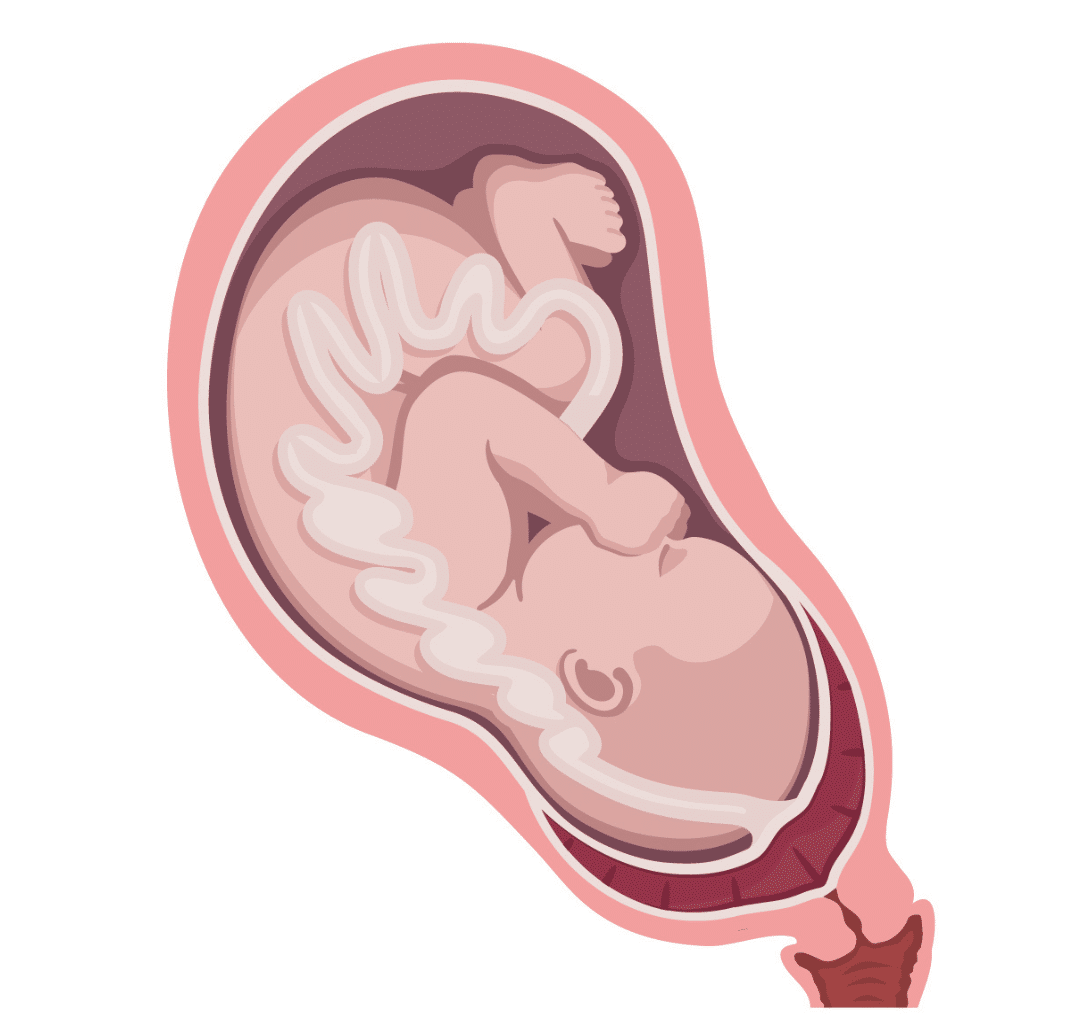
🔹 Placenta Previa is when the placenta has grown very close to, or over the cervix. Dilation of the cervix can cause the placenta to detach and risk the health of the baby.
🔹 Abrupted Placenta is when the placenta prematurely detaches from the uterine wall. If this happens, the baby’s source of oxygen and nutrients can be compromised, necessitating an immediate birth.
🔹 Transverse Lie is when a baby is positioned horizontally in the uterus. In this scenario, the baby is unable to move through the pelvis. If efforts to move the baby into a vertical position are unsuccessful, a Cesarean birth becomes necessary.
🔹 Eclampsia or HELLP are hypertensive disorders that may develop in pregnancy. If identified early enough, someone with one of these conditions may safely have an induced vaginal birth. If the condition has advanced too far for induction to be safely considered, a birth by Cesarean birth becomes the safest choice.
🔹 In cases where a large uterine tumor or fibroid blocks the cervix, the baby may be unable to access or pass through the birth canal, necessitating a Cesarean birth.
🔹 Cephalopelvic Disproportion is diagnosed when a baby’s head or body is legitimately too large to pass through the pelvis. Since the baby’s head and the pelvis are flexible, this is a rare occurrence most commonly resulting from extreme malnutrition in childhood, a pelvic injury, or an inherited genetic issue that makes the pelvis narrower than normal. Poor positioning of the baby or an exceptionally large baby can also contribute to the diagnosis. In most cases, patience, position changes, and the use of Pitocin augmentation can lead to dilation progress and a vaginal birth. If these alternatives do not result in cervical change, or the baby is unable to move down through the pelvis, a Cesarean birth may become necessary.
🔹 An initial outbreak of Herpes in late pregnancy significantly increases the risk of transmission to the baby. The transmission rate during an initial outbreak at the time of birth can be as high as 57%, as opposed to the much lower rate of 2%, in patients who have previously had an outbreak. Given the danger the virus poses to an infant, Cesarean birth is recommended in this rare situation.
🔹 Untreated HIV can increase transmission to the baby during birth from below 5% to 15-45%, necessitating a Cesarean birth.
🔹 Uterine rupture is an extremely rare but serious complication where the muscular wall of the uterus tears, necessitates an immediate Cesarean birth.
When else may a Cesarean birth be suggested?
There are also instances in which a care provider may suggest a Cesarean birth, despite the benefits being unclear or not firmly established by medical evidence. The decision to have a Cesarean birth in this case should be weighed carefully regarding the individual person’s health, circumstances, and wishes. Additional reasons that are often suggested for Cesarean birth include:
🔹 Macrosomia, or a baby deemed “large for gestational age” is often given as a reason to consider having a Cesarean birth. However, attempts to measure the baby’s size can be inaccurate and for most people, the evidence does not support a surgical birth withou t first attempting a vaginal birth. Studies have also shown that a head circumference >98% may be a better indicator of potential birth complications requiring a Cesarean birth than overall size.
According to Evidence Based Birth, “Research has consistently shown that the care provider’s perception that a baby is big can be more harmful than an actual big baby by itself.”
🔹 Maternal Age is also given as a reason to have a Cesarean birth. However, there are no studies that answer whether a planned Cesarean birth is better for those over the age of 35.
🔹 Some care providers may also offer a Cesarean birth to those who have already had several babies. However, the number of previous births has not been shown to increase likelihood of poor birth outcomes.
🔹 Although Cesarean birth rates are higher for those who have used assisted reproductive technology, Cesarean births for this population should continue to be evidence based.
🔹 A planned vaginal birth of a breech baby may be a reasonable option, based on care-provider experience and hospital-specific protocols for eligibility and birth management. It is also advised that an external cephalic version should be offered as a first alternative prior to a planned Cesarean birth, and there are many ways parents can encourage a baby to move into a vertex position in preparation for birth.
For more information on Cesarean birth and VBAC, please visit the International Cesarean Awareness Network’s website, www.ICAN-online.com.