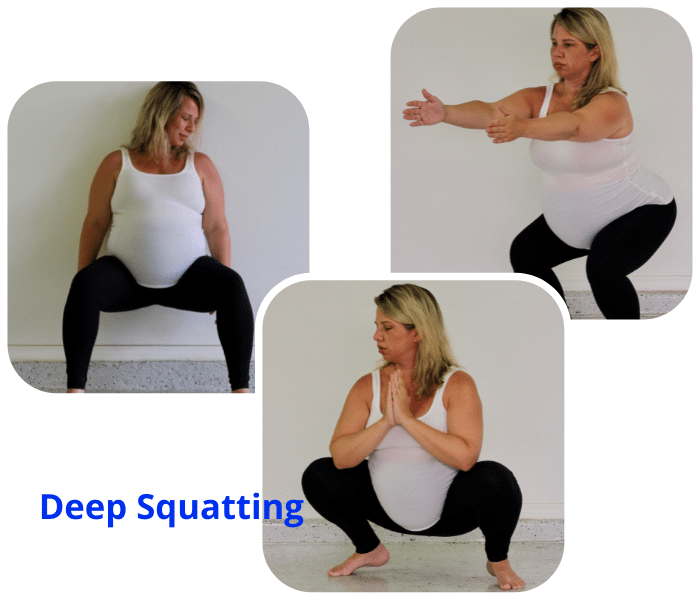
Squatting during pregnancy:
This practice improves mobility in the hips, strengthens glutes and legs, promotes a wider pelvic outlet and increases elasticity of the pelvic floor. This exercise/position can help prevent “pregnancy waddle” and decrease instability and excessive motion of the pelvis. Squatting is also the most natural position for birthing since it increases the pelvic opening, providing more room for baby to descend.
Practicing squatting during pregnancy makes it easier to do during birthing, and there are different types of squatting to consider – partial (bottom the level of the knees) and deep (bottom lower to the floor).
Please note: Squatting opens the pelvic area and encourages baby to settle deeper into the pelvis. Prenatal care providers suggest that those who are 34 weeks and beyond confirm that their baby is head down before continuing deep squatting exercises, and those with a low lying placenta, posterior facing baby, hemorrhoids, low lying umbilical cord, or an already engaged baby should avoid squatting during pregnancy. Those with spinal issues and symphysis pubis may want to avoid squatting as well, and those who are pregnant should check with their medical care giver before doing any exercises or positions during pregnancy and birth!
Squats can be safe and beneficial for most people in the third trimester, provided you have doctor’s approval and no complications, but you should modify your stance and technique as your belly grows. A wider, “sumo” stance is often more comfortable, and you can use a chair or wall for support to maintain balance and prevent falls. It is crucial to stop exercising and consult a healthcare professional if you experience pain, dizziness, or other warning signs.
Widen your stance:
A wider, sumo-style stance can make room for your belly. Point your toes out slightly.
Keep a chair, wall, or other stable object nearby for balance.
A box squat variation, where you squat down to a box or chair, can be helpful and easier to manage.
Inhale as you lower:
Breathe in as you bend your knees and lower your hips.
Exhale as you stand back up, engaging your core to support your back and baby.
Listen to your body:
When to stop and consult a doctor:
- Dizziness
- Pain
- Vaginal bleeding
- Shortness of breath
- Racing heartbeat or chest pain
- Vaginal fluid leakage
- Uterine contractions
- Muscle cramps
Always be safe!