As your pregnancy progresses, especially into the third trimester, your care provider may recommend various tests to monitor your baby’s well-being. One of the most common of these is the non-stress test (NST), a non-invasive, painless way to check how your baby is doing inside the womb. But what exactly is an NST, and why might it be needed?
Let’s break it down.
💡 What is a Non-Stress Test?
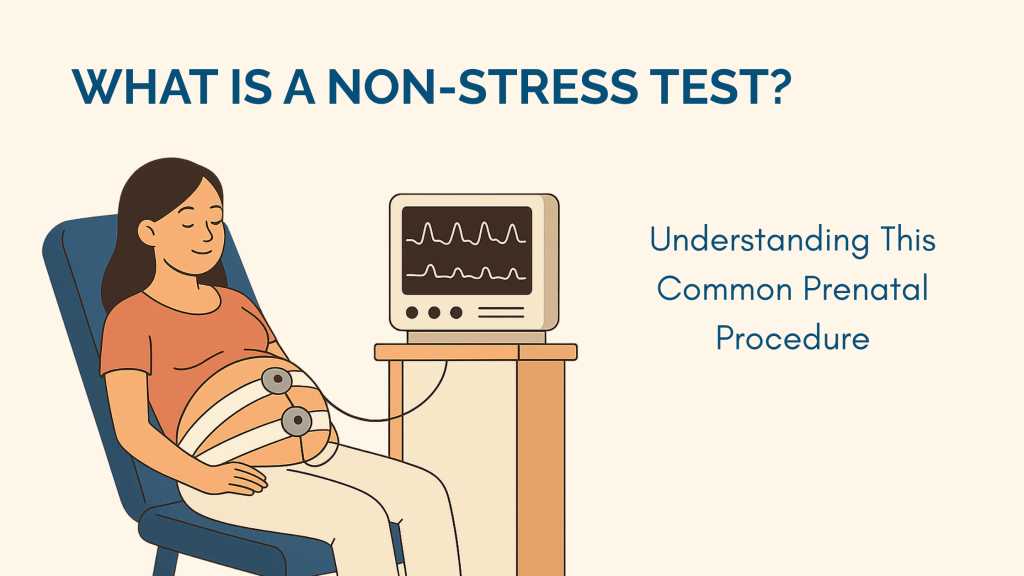
A non-stress test is a prenatal test used to evaluate your baby’s heart rate and how it responds to movement. The term “non-stress” refers to the fact that nothing is done to stress your baby. There are no medications, contractions, or invasive procedures involved.
It’s called a “test,” but it’s more of an observational monitoring session to assess whether your baby is getting enough oxygen and is healthy and active.
🩺 How is an NST Performed?
The NST is typically performed in your care provider’s office, hospital, or a prenatal testing center. Here’s what you can expect:
You’ll lie back or recline in a comfortable position.
Lying on your left side may be recommended to encourage optimal blood flow.Two external monitors are placed on your belly:
One measures the baby’s heart rate (fetal Doppler).
The other records uterine activity, including any contractions.
You may be asked to press a button each time you feel the baby move, or the monitor will automatically record movements.
The test usually lasts 20 to 40 minutes, but sometimes longer if the baby is asleep or not moving much during that time.
🧠 What Does the NST Measure?
The NST looks for a pattern known as “reactivity.” A reactive NST means:
Your baby’s heart rate increases (accelerates) with movement, which is a good sign of health and oxygenation.
Typically, at least two accelerations of the heart rate within a 20-minute period are considered reactive.
A non-reactive NST means the heart rate didn’t meet the expected criteria in the time period. This doesn’t automatically mean something is wrong. Babies have sleep cycles and might simply be resting. In that case, your provider may try to gently stimulate the baby, extend the test, or schedule further testing like a biophysical profile (BPP) or contraction stress test.
📅 When is a Non-Stress Test Recommended?
Not everyone will need an NST during pregnancy. Your provider might recommend one (or multiple) if:
You are past your due date
There’s reduced fetal movement
You have a high-risk pregnancy (such as high blood pressure, gestational diabetes, or other medical conditions)
There’s concern about the placenta or baby’s growth
You’ve experienced complications in a previous pregnancy
You are expecting multiples (twins or more)
Some may have NSTs scheduled weekly or twice a week during the final weeks of pregnancy for ongoing reassurance.
🤍 Is a Non-Stress Test Safe?
Yes, absolutely. NSTs are completely non-invasive, safe, and comfortable for both mom and baby. There are no side effects or risks involved.
Many pregnant moms find it reassuring to hear their baby’s heartbeat and see the printout of their baby’s movements and heart rate activity. Others may find the process nerve-wracking, especially if they’re unsure why the test is being done. Remember, NSTs are a tool to provide information and peace of mind, and asking your provider to explain the results can help reduce any anxiety.
🧘♀️ Tips for a Relaxing NST Experience
Eat a small snack before the test, which can help get baby moving
Bring headphones or relaxation tracks to help you stay calm (like your Hypnobabies hypnosis tracks)
Use the time to bond with your baby, listening to their heartbeat and imagining them thriving and growing strong
Ask questions if you’re unsure about anything. Understanding the process can ease your mind
Final Thoughts
A non-stress test is a gentle and effective way to check on your baby’s health as your pregnancy progresses. Whether it’s part of your routine monitoring or recommended for a specific reason, NSTs offer a window into your baby’s world, reassuring you that they’re happy and well-supported as you approach the beautiful day you’ll meet them.
🧷 Want to feel more prepared for all aspects of pregnancy and birth?
Explore our Hypnobabies Hypnobirthing Course for deeply relaxing, empowering tools that support your entire journey, from prenatal testing to your birthing day and beyond.
Search
Categories
- Birth Center Stories 111
- Birth Hypnosis 33
- Birth Professionals 34
- Breech Babies 23
- Childbirth Education 55
- First Time Moms 198
- Home Birth 184
- Hospital Birth 500
- Hypnobabies Blog 198
- Inductions 70
- Know Your Options 95
- Media Library 21
- Multiples 18
- News 60
- Podcasts 2
- Pregnancy Hypnosis 25
- Start Here 24
- Uncategorised 34
- VBAC Birth 80
- Videos 31
- Water Birth 176