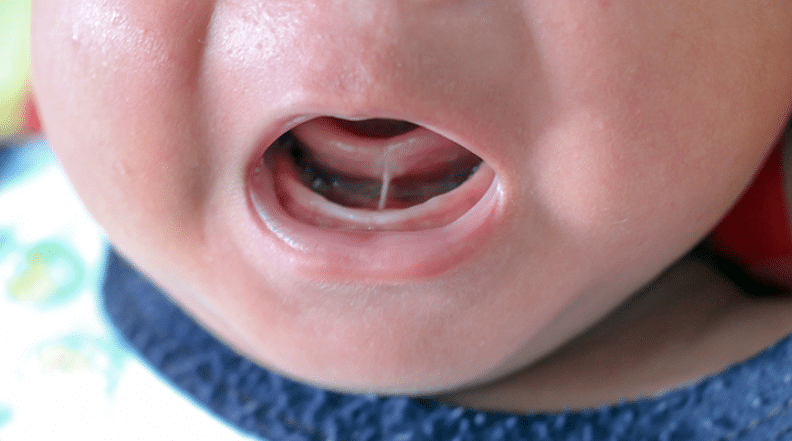
What is Tongue Tie?
Tongue tie, medically known as ankyloglossia, is a condition where the band of tissue under the tongue (called the lingual frenulum) is shorter, thicker, or tighter than usual. This restricts tongue movement, which can affect breastfeeding, speech, and even oral development as a child grows.
Although tongue tie can occur in both boys and girls, studies suggest it is more common in boys. It can range from mild—
where the tongue is only slightly restricted—to severe, where movement is significantly limited.
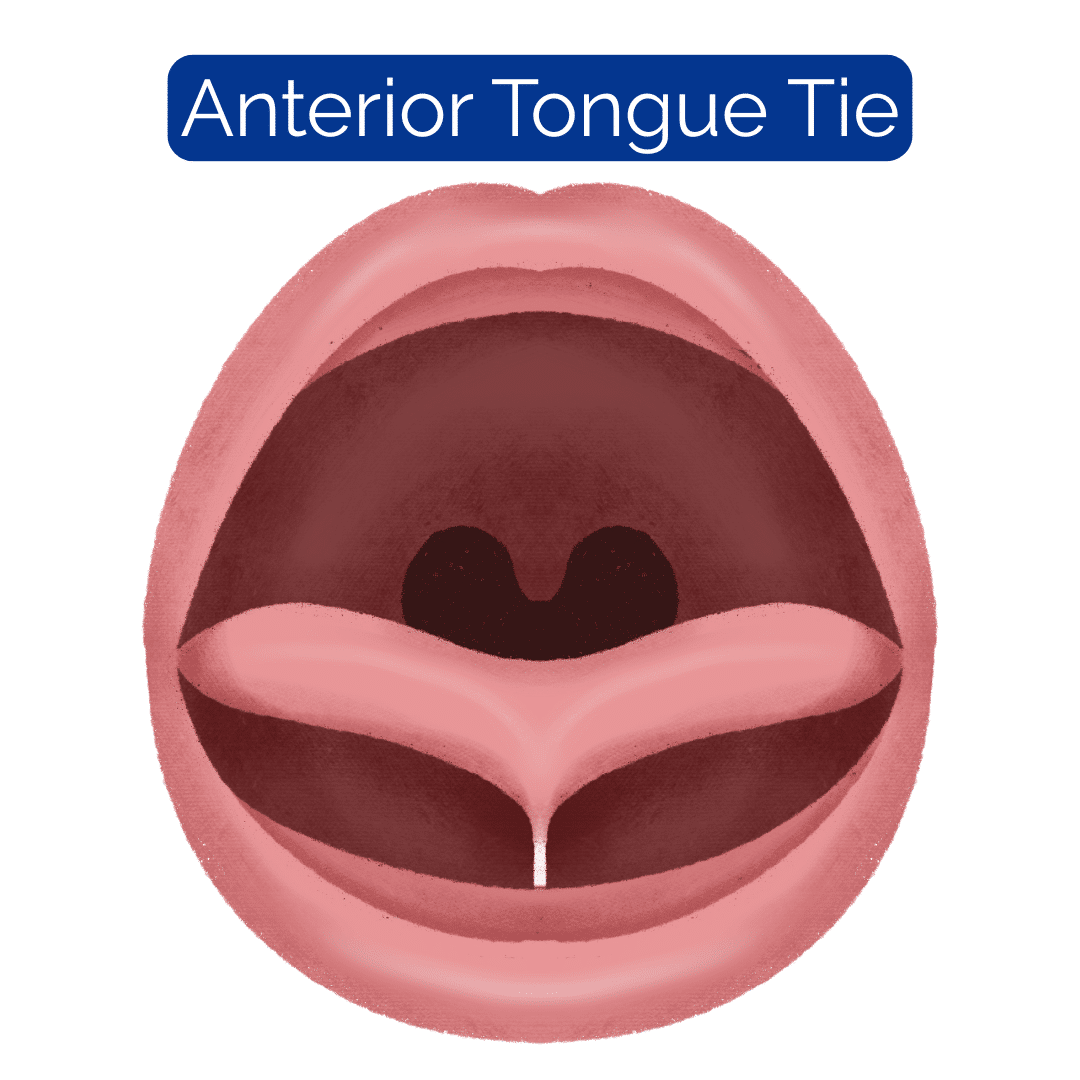
1. Anterior Tongue Tie (Types 1 & 2)
This is the most visible form of tongue tie. The frenulum attaches near the tip of the tongue and clearly restricts movement.
Type 1 – The frenulum attaches directly to the tongue tip and the lower gum ridge. This often gives the tongue a heart-shaped appearance when lifted.
Type 2 – The frenulum attaches just behind the tip of the tongue, still visibly restricting elevation and forward movement.
Impact:
Typically easier to diagnose because the restriction is obvious.
Can cause significant breastfeeding and latch problems.


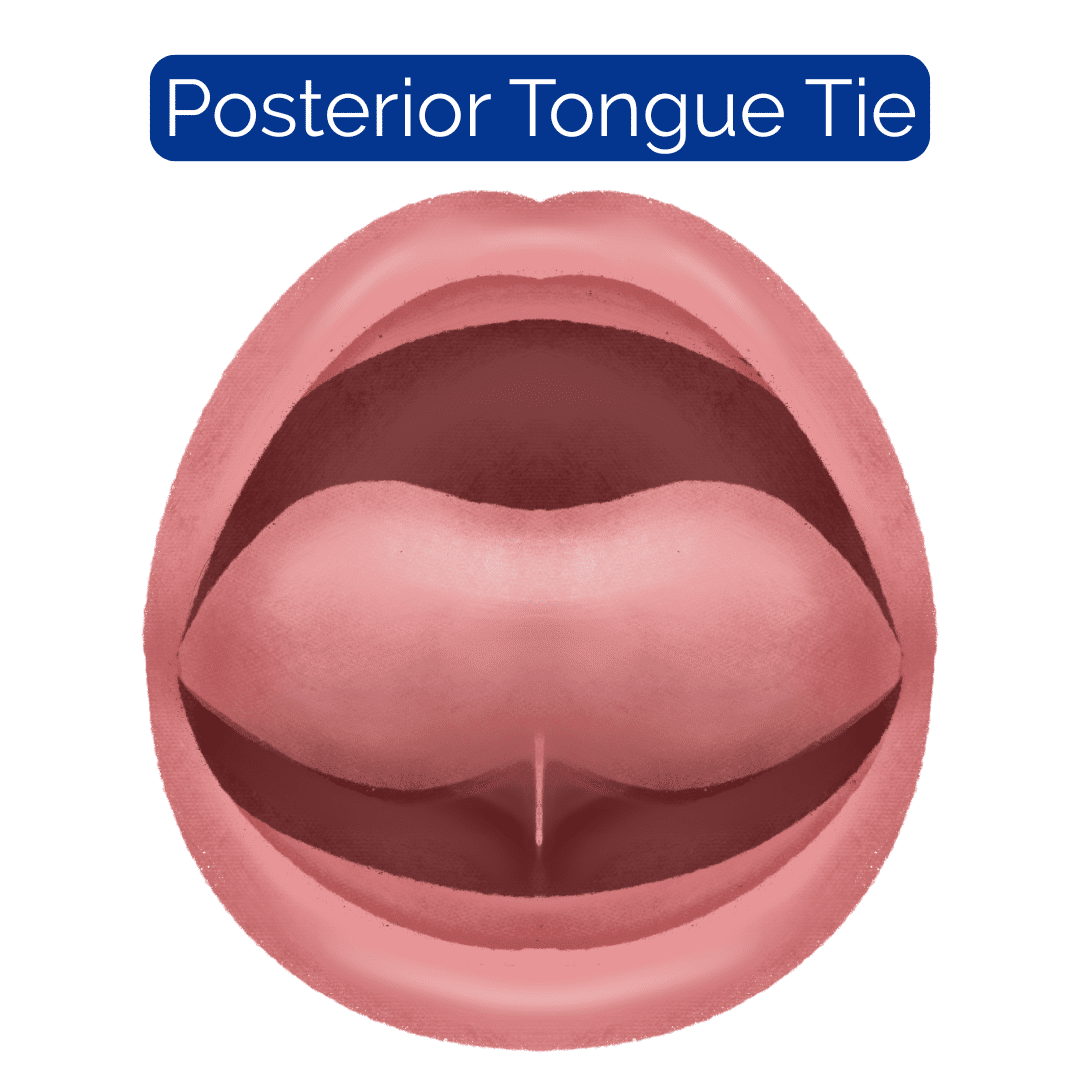
2. Posterior Tongue Tie (Types 3 & 4)
Posterior tongue ties are less obvious and sometimes missed on a quick visual exam. They involve a tighter or thicker frenulum that restricts movement even though it attaches further back.
Type 3 – The frenulum is attached to the mid-tongue and the middle of the floor of the mouth. It’s harder to see and may look like a thicker band.
Type 4 – The frenulum is buried under the mucous membrane, making it almost invisible. Tongue restriction is present, but the band can only be felt upon careful palpation.
Impact:
May still cause major feeding and speech issues, even though it’s not as visually obvious.
Often requires a functional assessment during feeding to diagnose.
3. Submucosal Tongue Tie
Some experts classify this separately. The frenulum is hidden under the mucosa (soft tissue lining the inside of the mouth), so it’s not visible at all. It can still cause restriction because the tissue underneath is tight.
Impact:
Usually identified only through palpation by an experienced provider.
May require specialized evaluation, especially if feeding issues persist despite normal-looking anatomy.
Signs and Symptoms
For newborns and infants, tongue tie is often discovered because of feeding challenges. Common signs include:
Difficulty latching to the breast or bottle
Prolonged or unsatisfying feeding sessions
Clicking or popping sounds while feeding
Poor weight gain despite frequent feeding
Mom experiencing nipple pain, cracked nipples, or recurrent mastitis
Limited tongue movement—such as difficulty lifting the tongue, sticking it out, or moving it side to side
As a child grows, other signs may include:
Trouble licking ice cream or cleaning food from teeth with the tongue
Speech articulation challenges (particularly with sounds like “t,” “d,” “l,” “th”)
Oral hygiene difficulties due to reduced tongue mobility
How Tongue Tie Affects Breastfeeding
Breastfeeding involves a coordinated action of the baby’s lips, jaw, and tongue. When tongue movement is restricted, the baby may not be able to draw the nipple deeply into the mouth, leading to inefficient milk transfer. This can cause:
Low milk intake for the baby
Inadequate breast stimulation for milk production
Sore or damaged nipples for the mother
Because of these challenges, tongue tie is sometimes linked to early weaning—though with proper evaluation and support, many families successfully breastfeed after treatment.
Diagnosis
Tongue tie should be diagnosed by a qualified healthcare provider, such as:
A pediatrician or family doctor with experience in infant feeding issues
A pediatric dentist or ENT (ear, nose, and throat) specialist
A full assessment considers not only the appearance of the frenulum but also how it functions during feeding and tongue movement.
Treatment Options
Monitoring and Support
If symptoms are mild and feeding is going well, some families choose a “wait and see” approach.
Lactation support, adjustments in positioning, and oral exercises may help.
Frenotomy (or Frenulectomy)
A quick, in-office procedure where the frenulum is snipped with sterile scissors or a laser to free tongue movement.
Often performed in newborns and young infants, recovery is typically fast, and feeding improvement can be immediate.
Frenuloplasty
A more involved surgical procedure, sometimes recommended for older children or complex cases, involving stitches and possibly general anesthesia.
Aftercare and Support
After a tongue tie release, providers may recommend:
Oral stretching exercises to prevent reattachment
Continued lactation consultant follow-up to improve latch and feeding
Monitoring speech development and oral health as the child grows
When to Seek Help
Parents should reach out for evaluation if they notice:
Persistent breastfeeding pain or damage despite good positioning
Baby not gaining weight as expected
Ongoing feeding frustration
Speech or oral movement concerns later in childhood
The Bottom Line
Tongue tie is a common condition that can impact feeding, comfort, and development, but it is also very treatable. With early recognition and the right support, most babies go on to feed and thrive successfully.
If you suspect your baby might have tongue tie, consult your pediatrician or a lactation professional. Early intervention can make a world of difference for both mom and baby.
💗 Enjoy 25% OFF all hypnobirthing courses, tracks, and hypnosis sets at Hypnobabies Academy.
Use code MyHypnobirth25-Off at checkout 🎁